
Cantors: Assemble!
Musical Magic at Cantorial Conventions

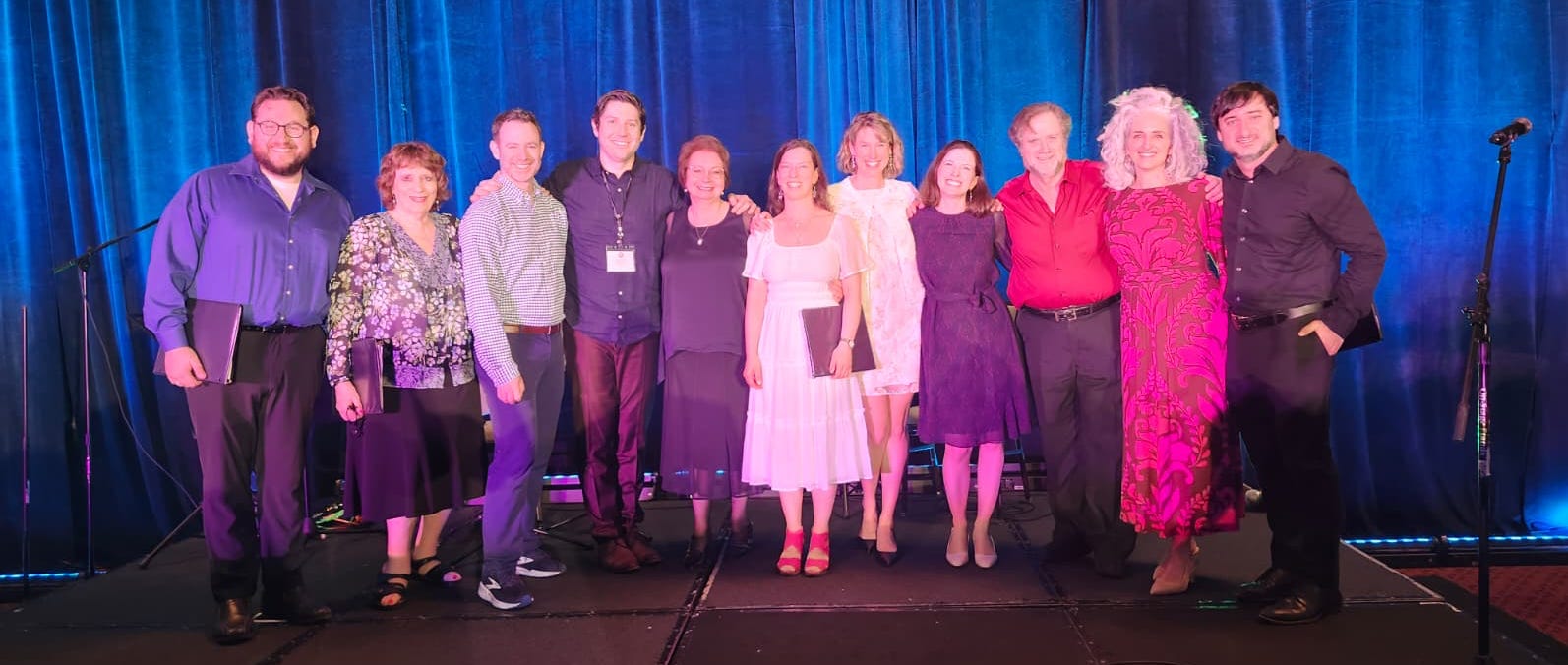
Last week, I returned from the annual convention of the Cantors Assembly.
So nu, what happens when cantors assemble?
Samuel Rosenbaum (1919-1997), writing to his congregation in Rochester half a century ago, captured the strange mixture of professional development, leisure, and musical bedlam at a cantors convention:
Yes, there was a lot of singing not only at concerts, workshops, demonstrations and services, but you could pick up a new Hashkivenu or a Rosh Hodesh bentsh’n in the lobbies, the dining room, on the sundeck or even in the health club. One soon became accustomed, too, to some hundred or more hazzanim doing their daily vocalizing in the privacy of their rooms; the walls are thin and the voices strong. Singing is an art which demands constant practice. The layman is understandably puzzled by the bedlam of a hundred vocalizing hazzanim, but to the professional it is a good sign that his colleagues are concerned with the perfection of their art.1
This short passage beautifully encapsulates the vibe of the old conventions in the Catskills, when the Grossinger’s Hotel became a teeming colony of chirruping cantors (especially in the shvitz). While it is rarer these days to find cantors singing in the sauna or getting their backs exfoliated with birch leaves, the pervasiveness and almost animal-like quality of their effervescent musicality still remains.
Generation to generation, styles change but the central features of the cantorial convention remain the same:
(1) Thrice-Daily Prayer. Every morning, afternoon, and evening, dozens to hundreds of cantors convene for minyan. As you might expect, the “amens” and the melodies are quite powerful, and the hum of cantors davening produces a high level of spiritual electricity from which the leader conducts the service. “Non-traditional” service options were also available in the morning, incorporating emergent musical styles from Songleader Boot Camp and the Institute for Jewish Spirituality. Whatever one’s prayer preference, the vibe was rich and nourishing, with harmonies stacked on one another, like hotcakes covered in syrupy-sweet kavannah.2
(2) Learning. With the resources of both special guests and the two-hundred cantors in attendance, conventions are always an opportunity to learn Jewish text, musical repertoire, and big ideas for the practice of Jewish leadership. This particular year included learning on personal prayer in the Talmud; a conversation with Israeli commentator Haviv Rettig Gur; a book talk on AI & Judaism; and many widely-ranging sessions of new synagogue repertoire, including non-Ashkenazic piyyutim with Rabbi Tori Greene.
Here’s a clip of her teaching Yedid Nefesh from the Bene Yisrael of India. Digesting the melody at convention, I was able to easily incorporate it this past Shabbat. The tune shares characteristics with the freygish mode of the the Ashkenazi service, and thus well-integrated into both the opening to Friday night and for kedushah and adon olam on Shabbat morning.
(3) Concerts. Sometimes two or three per day, conventions often feature a midday showcase of genre or composer-specific repertoire — including Jewish classical music, popular fare, communal singing, and choral music. This year featured two performances at Pittsburgh area synagogues and a large interfaith concert at St. Paul’s Cathedral.3 Leaning on the talents of the two-hundred assembled cantors, the convention succeeds in enriching the musical life of any community that it visits.
But what makes the convention transcend its programmatics is simply this: the pervasive influence of music. One one level, cantors are socialized into specific narrative, repertoire, and professional milieu. Connecting with another cantor carries the echo of the immigrant discovering another Jew from his former shtetl in Europe and crying out: “Lantzman!” Cantors also represent that peculiar and wonderful breed of person that believe not only in folk melody but also in the power of high religious art. Cantorial and choral music enthusiasts will surely find that itch scratched at our conventions. But like Rosenbaum’s description of the conventions of old, music flows far beyond the concert hall. It spills over into into the hallways, onto the bus, at the lunch table, in rehearsals, in conversation, and at late-night open mics and impromptu close-harmony sessions (often featuring a surprising amount of barbershop).
The reason is obvious. Put simply, those who sing together grow together.
After several days, the trust engendered by hours of daily singing between members leads to cascading positive feelings and vulnerability. Cantors open up — in poetry, song, and hallway conversations — about personal difficulties, including infertility, loss, frustration, and burnout. The bonds built by music serve as the therapeutic container for the surfacing and reconciliation with life’s challenges.
This story is also told by the beloved Yiddish art song, A Nign by Lazar Weiner, here delivered by one of our rising stars, Cantor David Childs. The song’s Yiddish poetry (written by Leibush Lehrer) tells the story of a pauper who argues with God, and yet finds himself entranced and reconciled with his Creator through the process of singing a wordless melody.
The uncanny power of music to reconcile people — with each other, themselves, and God — is one of humanity’s oldest spiritual technologies. It is the reason for hasidic melodies and choral singing alike. It is why neo-chasidic rabbinical schools begin Torah learning with a niggun. It is the bedrock of interfaith ensembles such as the West-Eastern Divan Orchestra and the Jerusalem Youth Chorus. And it is the reason the cantors conventions are so well-attended and well-loved. The bonding effect is cumulative and enduring.
When cantors assemble, they remind us all of the restorative powers of singing together.
As Lehrer’s poem concludes:
“The Jew sings, and blissfulness flows until he leaps from joy. Wonder upon wonder befalls him, whenever he sings such a melody.”
Samuel Rosenbaum, Words About Music (New York: Cantors Assembly, 1982): 58.
Like all sweets, there are limits to what is good for one’s health. The congregational “V’ne’emar” at the end of aleinu is a case-in-point, as the repetition of the words “ushmo echad” would become the site of the most powerful, if not the most self-indulgent harmonies of the day. I likened the occasion to a piece of chocolate: On the one hand, it can be exquisitely hand-crafted with subtle flavors; on the other, it can just be fatty and bad for one’s health. Like in Forrest Gump’s epigrammatic box, you never know what you’re gonna get.
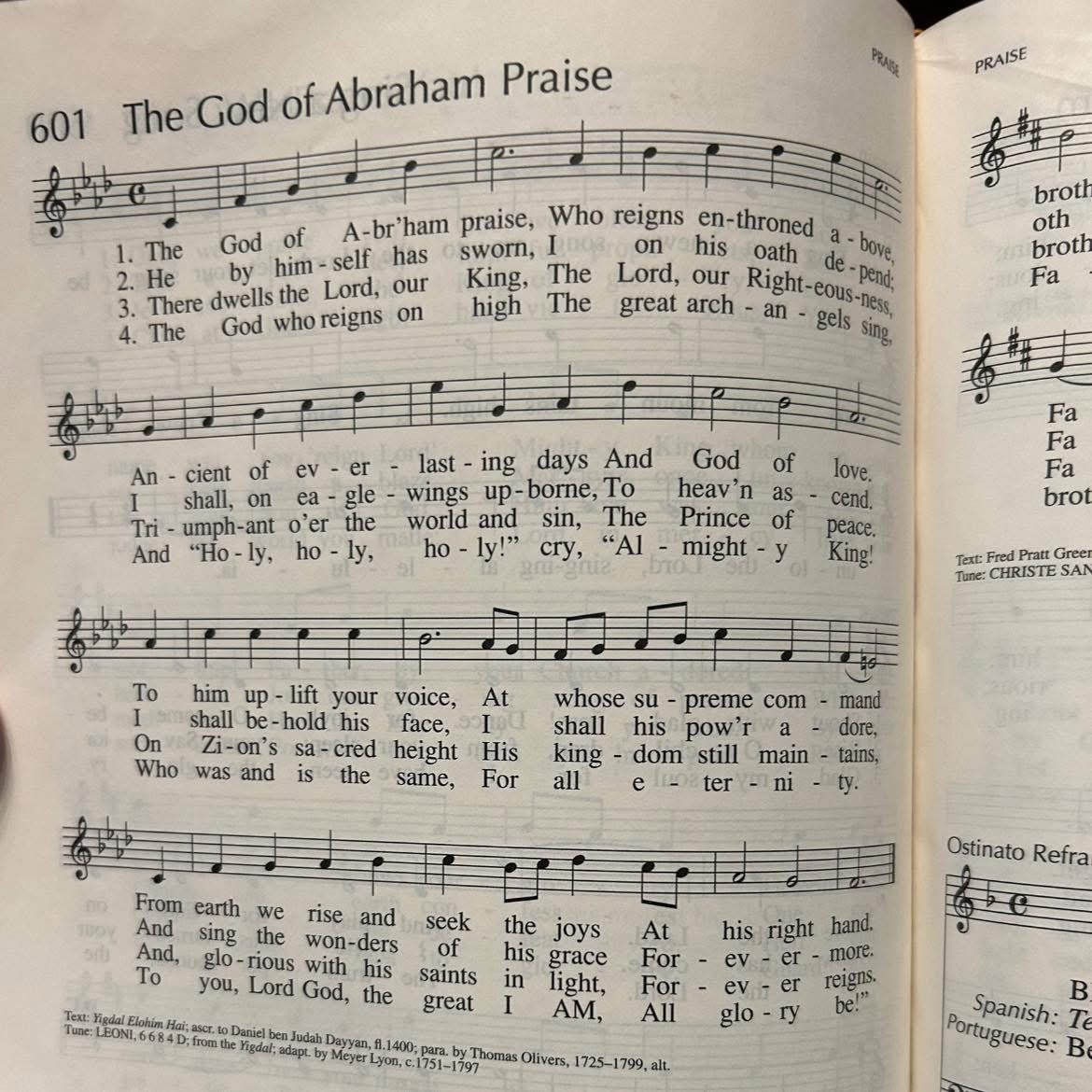
While in the pews for this interfaith concert, it gave me a smile to once again set eyes on the singular Jewish melody to make it into the Christian hymnal: “The God of Abraham Praise,” a hymn that Methodist Thomas Olivers (c. 1770) set to the Anglo-Jewish yigdal melody of Myer Leon (1750-1797).
David Child’s voice lifts your spirit to the heavens.
Always you are worth the read. Always.