
Rolling Along
The Story of My Doctorate

“Something is stirring,
Shifting ground ?
It’s just begun.
Edges are blurring
All around,
And yesterday is done.”
-Stephen Sondheim, Merrily We Roll Along
On a long plane ride back from Germany, I watched the Broadway revival of Stephen Sondheim’s New York society story, Merrily We Roll Along. To say I was moved was an understatement. The acting was so rich, so perfectly packing the intensity of onstage energy into the zoomed-in, unexaggerated realism of close-up cinema, along with tight musical style-shifts that made the show land fresh for a twenty-first century audience.
Sondheim’s Merrily is an inverted tragedy, the fragmentation of a friendship experienced in reverse chronological order until its original big-bang moment of meeting, bonding, and starry-eyed idealism. The medium and the message is disorientation, showing our impotence to affect our fate except to look back on our original good intentions and say:
How did you get to be here? What was the moment?
On that plane ride, I was asking myself that same question, but in the opposite register. I was returning home from one of the most pivotal moments of my professional life: successfully defending my PhD dissertation magna cum laude, a validation of four-and-a-half years of writing and a process that, as shocking as the journey of Merrily’s "old friends,” unfolded with disorienting serendipity, also over the course of twenty years.
This is that story — though you’ll forgive me for not telling it in reverse.

As I’ve written before, I wasn’t always sure that I wanted to become a cantor. A very special teacher and her theology-laden voice lessons had awakened my spiritual life in Vienna while I was a college junior. That fact is that my cantorial school simply said “yes” long before the Austrian school system where I had applied to teach English.
Yet my first year of graduate study in Israel enchanted my soul, anchoring my mind in modern Hebrew, traditional text study, Jewish life, and deep spiritual questions. I acquired a trusted rabbinic guide, bonded with the Land, and made old friends — cantorial colleagues who together converted our concertizing and friendly musical antics into a (mostly) a cappella group, The Wizards of Ashkenaz. Twenty years later, we are still performing.
Our class also studied weekly with a sagacious musicologist named Edwin Seroussi, the Chair of Jewish Musicology at the Hebrew University and the spouse of our program director. With him we soaked up the history of Israeli popular music, traveled around Israel and to Istanbul, and prepared Friday night services in Moroccan and Western Sephardic styles.
Little did I know that fifteen years later, he would become one of my doctoral advisors.
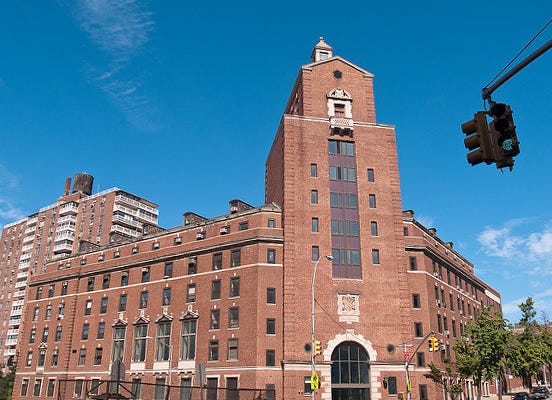
Returning to New York, I found myself restless for knowledge. Having arrived at school with experience as Shabbat and High Holiday prayer leader, cantorial classes often felt slow-moving, and my mind was hungry for more challenging learning and religious depth. I pursued courses in other departments, including history, biblical exegesis, Jewish law, intellectual history, and pastoral care. I even found my way to HUC-JIR — the Reform seminary downtown — where I studied education and songleading with reform seminarians and ethnomusicology under the direction of Dr. Mark Kligman.
Yet back uptown, I had come to a disturbing realization. My rabbinic colleagues, who included my roommates and frequent classmates, did not always have the best impression of cantors. In fact, they enjoyed a culture of making fun of us, which —thin-skinned artist that I was — I did not terribly appreciate. It would “really grind my gears” that someone would take me less seriously as a Jew because of my choice of religious vocation.

Investigating this culture of cantorial critique ultimately led me to the JTS library, where I discovered a bibliographer’s transcription of a three-hundred year-old satirical poem against Ashkenazi cantors. Their alleged foibles were alarmingly contemporary: Judaic ignorance, loudness, impiety, egotism, obesity, and retaining objectionable choral singers. This led me to probe further into the stacks, ultimately coming across an eighteenth-century defense of the cantorial profession, the Yiddish-Hebrew apology entitled Reiach Nichoach (Fürth 1724). Unwittingly, I had discovered my masters project. Phoning a friend over at HUC, Dr. Kligman graciously took me on as his advisee. After completing my masters, I believed that my historical “defense” of cantors to be concluded, as I moved on past graduate school to a quiet life of congregational domesticity.
Or so I thought.
Four years later, I received an unexpected letter from the editor of the European Journal of Jewish Studies. She was putting together a volume about Jewish Music in early modern Europe, and wondered if I might write a chapter on cantors. Two other scholars had turned her down, but each had recommended me after reading my thesis; I was apparently the only one interested in cantors from such an early period. Though it had been many years since graduate school, my academic curiosity was quickly rekindled as I launched on an after-hours project of expanding from one eighteenth-century cantorial apology into a broader, chapter-length view of early modern cantorial history.
Again, serendipity reigned supreme. The cantor emeritus of my synagogue, Abraham Lubin, was also a musicologist. Following his graduation from Etz Hayim Yeshiva, Jews College, and London College of Music in England, he had continued his scholarly pursuits as a pulpit cantor in America, acquiring a B.A. (CCM) and Masters (DePauw) in Music. When Cantor Lubin came to Bethesda in 1990, he was preparing to write his doctorate on Salomon Sulzer at University of Chicago, but had to abandon the degree to focus on congregational ministry. Yet his books, acquired over decades of scholarship and still held at the synagogue, served as a fit-to-purpose Jewish musicology library for my new academic endeavors.
When I departed Bethesda two years later, Cantor Lubin graciously offered me his books on permanent loan — they couldn’t stay at the synagogue, and there simply wasn’t enough room in his apartment. Little did I know that these books would become essential for enabling the success of my PhD research just a few years later.
Cantor Lubin never had the chance to complete his dissertation. When I defended my dissertation last week, I felt like I had finally pulled his books over the finish line.
Yet more surprises lay ahead.
My wife and I arrived in Ohio as co-clergy for a small synagogue in the summer of 2017. We celebrated a wonderful first year, culminating in the birth of our second child. Shortly after this blessing, I received a shocking invitation: my former book editor had become head of an Advanced Seminar at the Oxford Centre for Hebrew and Jewish Studies, and she had invited me to apply for a two-month faculty-level fellowship the following year to study early modern Jewish music with a dozen of the top scholars in the field.
Initially, our family balked. A two-month hiatus seemed an impossibility for people working in the pulpit. But thanks to the firm encouragement of my mother-in-law, we pushed forward and found a way to work it out with our community, and a year later I flew off to Oxford on a thrilling, unexpected jaunt to study Jewish music history.
It began in January of 2020.
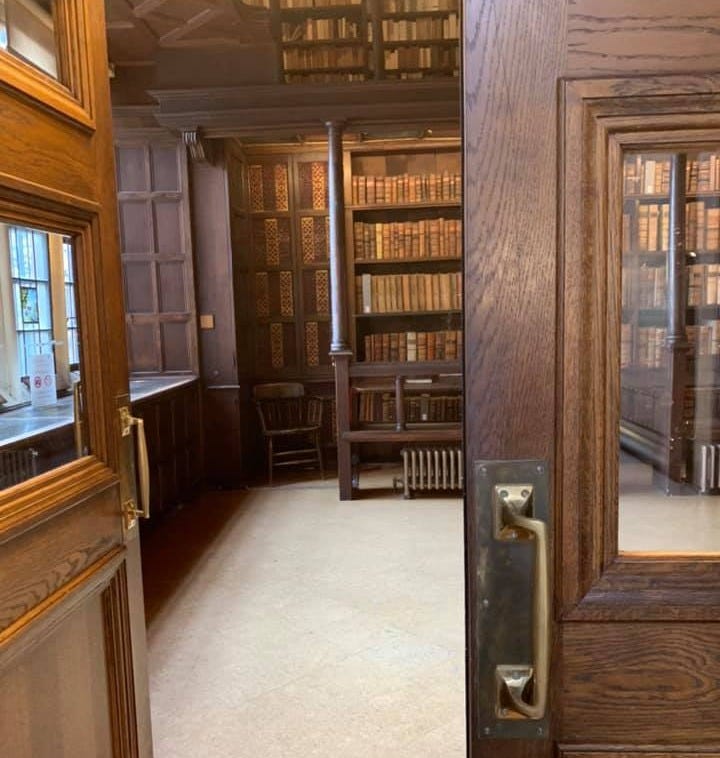
There, in the stone streets and storied libraries of Oxford, my intellectual awakening occurred. I convened weekly with a fantastic group of Jewish music scholars (including my old teacher, Dr. Seroussi), spent precious hours in the Bodleian Library discovering new sources, and deepened my questions about the nature of the cantorate as it transformed in early modern Europe from a part-time rabbinic bailiwick to a full-time communal position driven by musical artistry. I felt my brain muscles bulking up, benching the analytical weight of new ideas, great books, and old languages and rehydrating via the nourishing intellectual life, culture, and majesty of medieval Oxford.
Yet soon it would all come abruptly crashing to an end. The coronavirus pandemic ballooned across the world and I departed the UK in haste — a few days before the end of my fellowship and less than twenty-four hours before the US border shut. On lockdown at home, my wife and I adjusted to virtual synagogue life and made the best of it in our nuclear family pod.
Time passed, and still another message came my way. It was my editor from Oxford, who unfolded to me a felicitous and again wholly unexpected opportunity: the chance to earn a doctorate.

I admit, the idea had crossed my mind before. While in Bethesda and writing my book chapter, I had met with the head of the Jewish Studies Department at University of Maryland - College Park. But after hearing the details, I found it to be untenable. Part-time American PhDs took upwards of ten years to graduate, requiring classes, university employment, and other extracurriculars over and above the doctoral thesis. It seemed wholly unrealistic for a young pulpit clergyman just establishing himself.
But this European opportunity was a different animal. Medieval universities like this one offered a “traditional PhD” — which meant dissertation only. What was more, the university could accommodate me writing from my American home and in English. I could, theoretically, take as long as I needed. And I could apply for a scholarship via the Ernst Ludwig Ehrlich Studienwerk — the German funding organization for Jewish university students.1
My acceptance was not guaranteed — after all, my spoken German was not as good as it could be, and I didn’t actually have an M.A. in Jewish Studies. But by beautiful coincidence, my hunger for academic learning in graduate school had led me, quite unintentionally, to complete the program’s M.A. requirements — I had earned it de facto, if not de jure. With my editor-turned-advisor’s advocacy and the and the gracious addition of Dr. Seroussi to my doctoral committee, I matriculated at Martin-Luther-University Halle-Wittenberg in Halle, Germany.2
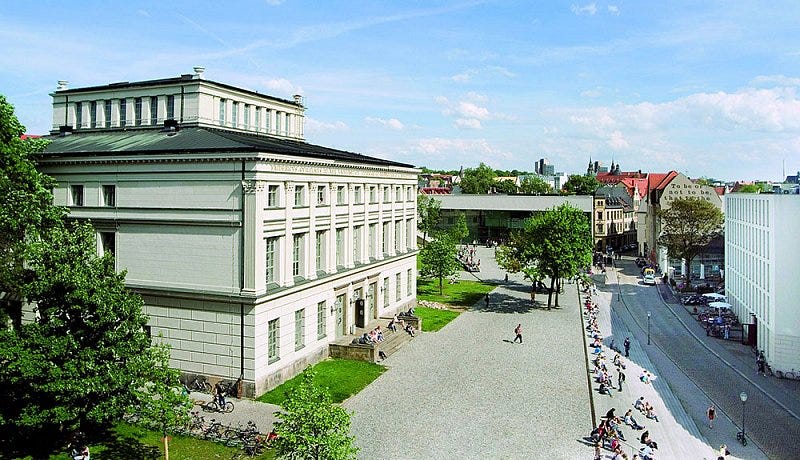
I completed my dissertation over the next four-and-a-half years, representing thousands of hours of reading, writing, and cogitation. I like to say that I wrote it at “cholent speed” — slow-cooking the work until it was tasteful, rich, and aromatic. My cantorial activities down-shifted to part-time, as I traveled periodically to lead communities in Rochester, Fort Myers, and Sarasota and made friendships and connections that I will always cherish. While reading and writing each week, I also busied myself with speaking opportunities, feeding my appetite for socialization and allowing me to hone my research in dialogue with scholars and laypeople alike. By the end of 2025, I had lectured for thirty-three separate institutions, including universities, synagogues, seminaries, and conferences.
And of course, I started this Substack.

Yet none of this would have been possible without a series of fortunate events and supportive people. I am singularly lucky to have lived in the Great State of Ohio for the length of my studies. Its OhioLINK interlibrary loan program allowed me to request twenty-five books at a time from any public university and have them shipped directly to my local public library. Over the course of four years, I cycled through hundreds upon hundreds of books from OSU, Oberlin, Case Western, Cincinnati, CSU, and other colleges, allowing me full academic resources from the comfort of my Buckeye homestead.
Anyone involved in scholarship knows how much it relies upon human generosity — the good will and availability of archivists, librarians, scholars, and advisors to share their knowledge and go out of their way to help you find something important to your research. There are countless people who helped me in this way, especially my Committee Chair, Dr. Ottfried Fraisse, as well as academic connections from the distant past like Dr. Kligman and Dr. Seroussi who returned to center stage in supporting my scholarship. And I remain eternally indebted to my family, who were patient, loving, and encouraging across this project which lived in our home for half a decade.
A final, resounding hakarat hatov (appreciation) goes to my Doktormutter — Dr. Diana Matut. Director of the Old Synagogue in Essen, an Oxford Yiddish instructor, aand a collaborator on many European Jewish music projects, Dr. Matut is the world’s expert on the Yiddish songs of early modernity. She was also the editor of that Jewish Studies journal who encouraged me to apply to Oxford and who suggested and helped me navigate my matriculation at Halle. As my advisor, she labored in the trenches, commenting on my research and guiding me throughout the PhD process. This version of my timeline is primarily the product of her incredible and generous encouragement and support.
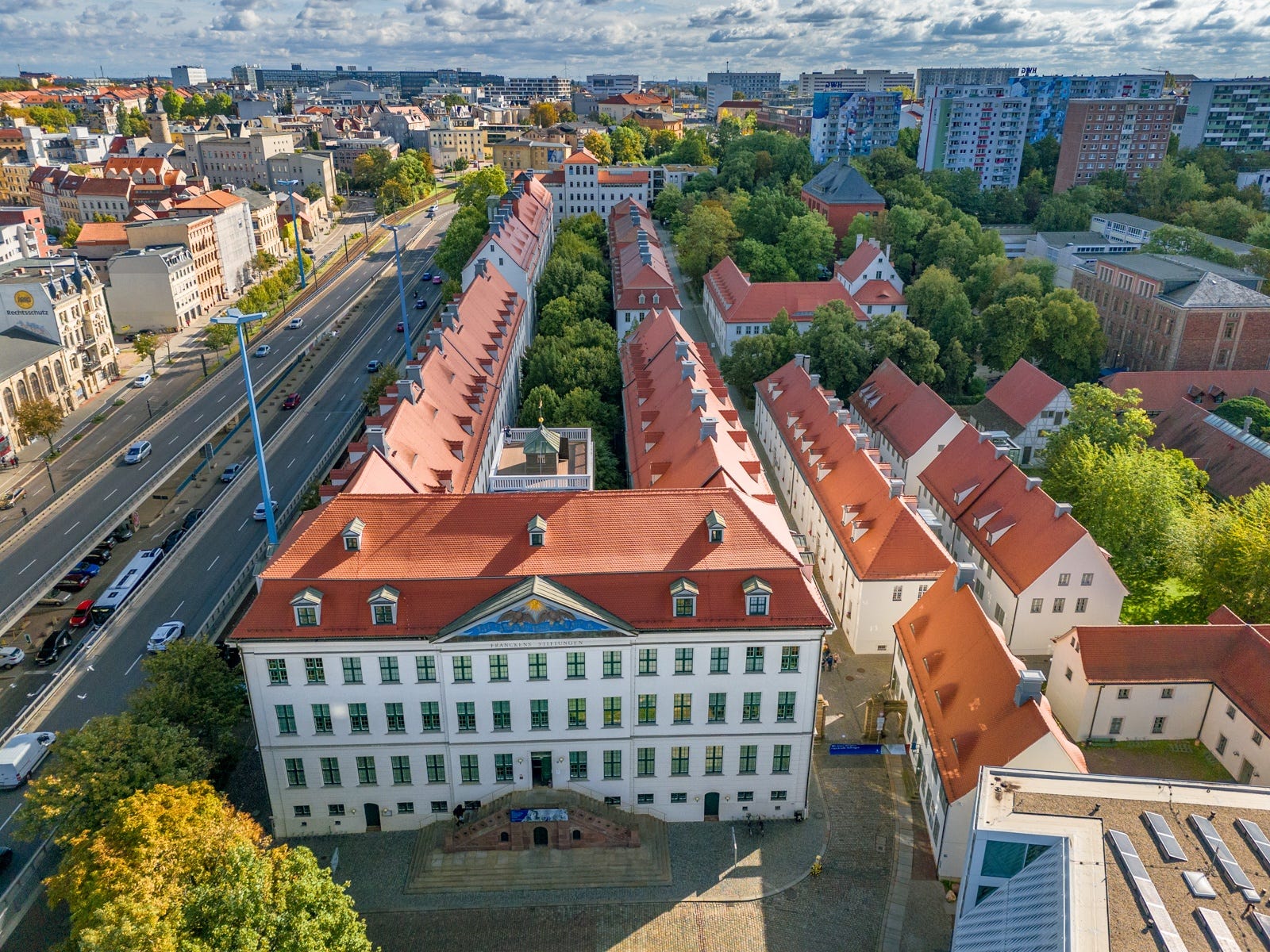
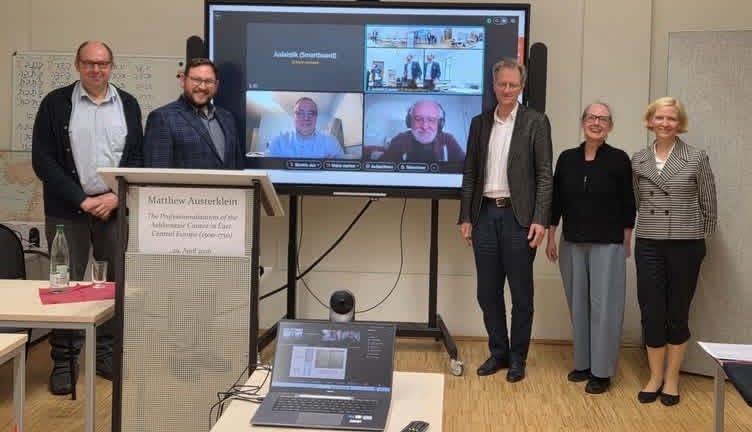
Last week, I finally traveled to my university in Germany to defend my dissertation. Halle is a quaint, old city outside of Leipzig, largely sheltered from allied bombing and thus retaining much of its classic architecture. What time I wasn’t spending preparing for my oral exam and my dissertation defense, I spent punting around town making pilgrimage to museums, cafés, and even Handel’s childhood home.
But eventually the time came.
After about two hours, a nearly half-decade journey came to its short, joyful resolution, leaving me stunned with the feeling:
How did you get to be here?
At the fulfillment of this doctoral dream, I can’t help but feeling like this all happened to me. So much kismet was required for its success — calls out of the blue, relationships from the past, and being in the right place and the right time.
This play, like Merrily We Roll Along, has ended with a new beginning. But unlike Sondheim’s tragic idealists, I don’t feel that it’s “my time.”
I feel part of a story that does not belong to me.
Germany is odd in that its graduate funding is provided by political parties, seemingly in order to socialize young scholars into political organizations and civic society. Jews developed a separate organization.
MLU Halle-Wittenberg was a nineteenth-century merger of two medieval universities — the University of Wittenberg (1502) and the University of Halle (1694). Among their alumni, the former boasted Martin Luther and Hamlet, Prince of Denmark (at least according to Shakespeare); the latter claimed the famous composer George Friedrich Handel, mathematician Georg Cantor, and the philosopher Friedrich Schleiermacher. But among Jews, Halle University was known especially as the doctoral home of key scholars of Wissenschaft des Judenthums, including Leopold Zunz and Marcus Jastrow.
What a fascinating journey. Mazal tov!
Sounds like you've put in the work. Maybe feeling a sense of imposter syndrome. I felt that for years after my dissertation. Especially when someone called me doctor.