
The Ever-Echoing Heartbeat
Seeking Jewish Music in Victorian England

We are all musicologists from birth. In utero, we study the heartbeat of our mothers, meditating upon each pulse as its steady beat instructs us in the rhythm of life. To this our own heartbeat drums its tiny counterpoint, uniting with the deep resonances of the body and the distant strains of life beyond the womb. This is the living symphony within which our souls form their primal music theory. The Talmud teaches that an unborn child knows the entire Torah, only forgetting it at birth via the gentle touch of an angel. Just as we study Torah to return to that original divine knowledge, we study music in order to recapture the forgotten soundscape of the loving womb.
Musicology is therefore not just academic, but emerges from a deep and personal raison d’ètre. My own journey reflects this truth: I have always been a musician, whether as a synagogue service leader, classical instrumentalist, a cappella singer, or student musical theatre actor. But my interest in musicology, particularly through my graduate work, bubbled up from a desire to unite the instinctive, soul-based pursuit of music with my place in the world as a religious Jew.

My story is but one among my many colleagues, whose journeys into Jewish musicology are as diverting as they are diverse. And now you can listen to them — via podcast.
Sounding Jewish, produced and hosted by rising star Samantha Freedman, provides a fascinating monthly conversation with “global musicologists, ethnomusicologists and sound studies scholars who specialize in the music and sound of Jewish experience.” Three seasons of interviews have yielded a bountiful harvest of headliners, including Edwin Seroussi (my advisor), Ruth HaCohen, Tina Frühauf, Gordon Dale, Judah Cohen, Judith Cohen, Rebecca Cypess, Rachel Adelstein, Jeremiah Lockwood, and a dozen more colleagues from the field (A fourth season is on the way this fall). Whether you are considering a career move or just love Jewish music, it’s a great introduction to the personal stories of these engaging and celebrated scholars.
In addition to current voices, I also take a keen interest in the origins of Jewish musicology — those prenatal forms which expose the first thrumming heartbeats of a gestating field. Synagogue cantors were among the first on the scene, writing their scholarship in cantorial journals long before it existed in the formal academy. Yet as Yonatan Turgeman has recently demonstrated, the origins of Jewish musicology were equally rooted in active dialogues between these cantors and Western musicologists like Oskar Fleischer, as they together attempted to reconstruct “Hebrew” music and establish Jewish musical authenticity for a broad audience. Here, the Jewish cantor and the Christian academic became partners in giving Jewish music its public recognition.
One of my favorite unsung voices from this early era of Jewish musicology comes from merry olde England and the story of a rabbi who fell in love with Jewish music (and ultimately, with a cantor’s daughter). At the height of the Victorian era, he rose to become the English-speaking world’s foremost authority on Jewish music at a time when no such field of study yet existed.
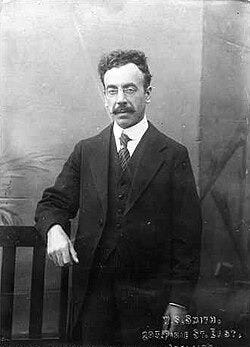
Rabbi Francis Lyon Cohen (1862-1934) is a fascinating character. A pulpit Orthodox clergyman, Cohen served several congregations in Dublin and London as a cantor (known then and now in the UK as a “Reader”). Not long after graduation, he joined the faculty of London’s Orthodox seminary, Jews College, teaching hazzanut for seventeen years (1887-1904) and establishing himself as an authoritative voice on Jewish music and worship. He published articles in various journals, acted as Chair of the Choir Committee of the United Synagogue, edited musical anthologies for Anglo-Jewry (including the famous “Blue Book”), and ultimately created the music-related entries of the first Jewish Encyclopedia (1901-1905).
Rev. Cohen was renowned beyond his musical leadership as well. He founded the Jewish Lads Brigade, a still-active youth movement among British Jews. He served as the first Jewish chaplain of the British Army (1892-1904), organizing military services and encouraging religious pride among Jewish servicemen. But his greatest fame was yet to come: after receiving rabbinic ordination, he shipped off “down under” to become Chief Minister of Australia, a post which he held for three decades. Yet it is the first chapter of his career in which he built his reputation as a Jewish musicologist, a field which was largely uncultivated in the English-speaking world.
How does one study Jewish musicology in such a vacuum? Rabbinical students like F.L. Cohen enjoyed a dual curriculum of secular and religious studies — while studying Torah, Talmud, and practical rabbinics at Jews College, these future Jewish ministers simultaneously received a classical education at University College, London, studying literature, logic, elocution, and rhetoric. Cohen attended lectures in the arts at UCL and even passed an intermediate music examination, although he never completed a secular diploma.
Examining his first published article, “Synagogue Music: Its History & Character (1883),” one discovers the written sources, both Jewish and Christian, by which Cohen sought to anchor his novel pursuit of Jewish musicological study:1
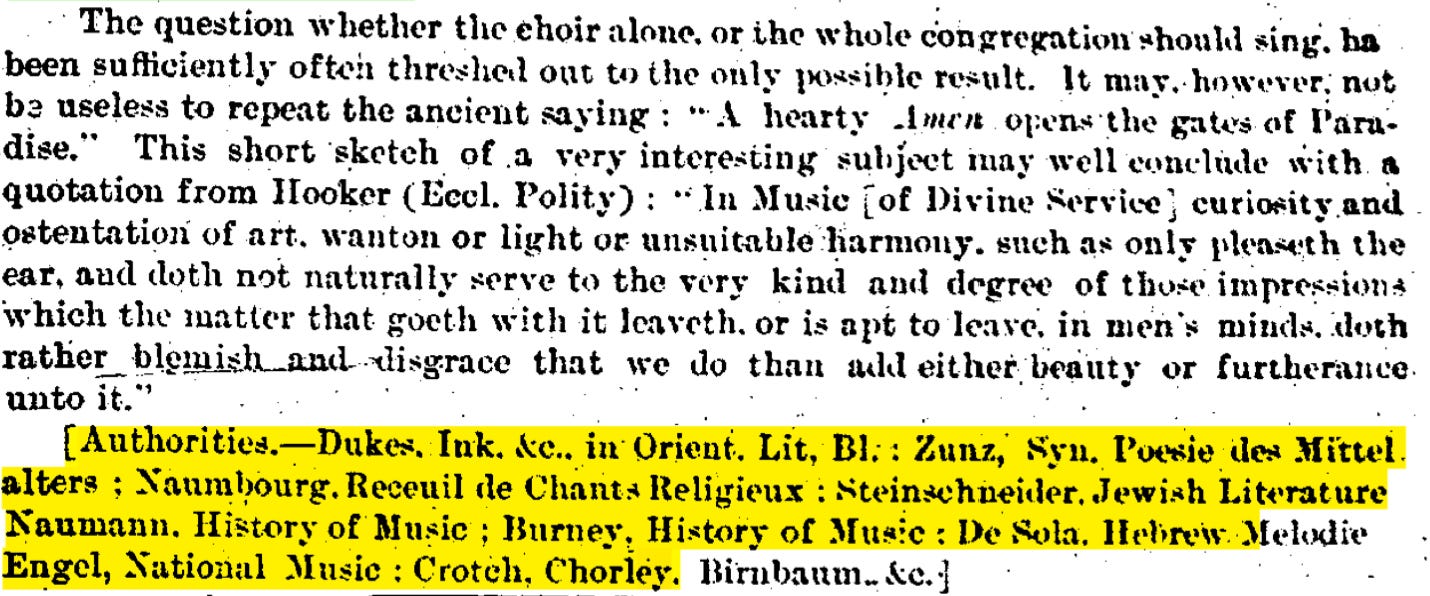
This highlighted list at the end of his article reports eleven “authorities “ on which the then-student Francis L. Cohen could rely — a small shelf of published works, each falling into one of three categories: Jewish works of Wissenschaft des Judenthums, books of synagogue music, and Christian music histories analyzing Jewish music under the rubric of nationalism. “Cohen’s Eleven” included:
Synagogal Poesie des Mittelalters(1855) by the founding voice of Wissenschaft des Judenthums, Leopold Zunz (1794-1886).
Oxford bibliographer Moritz Steinschneider’s Jewish Literature From The Eighth To The Eighteenth Century, which contains a handful of musical references.
Leopold Dukes’ Jewish-music-related articles in the German journal, Literaturblatt des Orients.2
The introduction to the British Rabbi David Aaron de Sola’s music book, The Ancient Melodies of the Liturgy of the Spanish and Portuguese Jews (1857).
The brief history of Jewish music published by Cantor Samuel Naumbourg in the introduction to his Receuil de Chants Religieux (1874).
Charles Burney’s A General History of Music (1789) and Emil Naumann’s History of Music (1880), both of which included short reflections on the music of the biblical Hebrews.
Carl Engel’s An Introduction to the Study of National Music, featuring a short bibliography of nineteenth-century publications of synagogue music and short, offhand comments on the “Oriental” origins of Jewish music, particularly among the Sephardim.
Lectures by the Oxford music historian William Crotch (1775-1847), which contained short observations about Jewish music in the context of national music (largely drawing from Benedetto Marcello’s Estro Poetico Armonico).
Henry Fothergill Chorley (1808-1872)’s The National Music of the World, which largely speaks of Jewish music based on De Sola’s Ancient Melodies with some speculation regarding modern composers and performers of Jewish origin.
And finally, notes from the grandfather of Jewish Musicology, Eduard Birnbaum (1855-1920).
This last source was the most potent, as Cantor Birnbaum’s growing reputation as a continental authority on Jewish music became known to Cohen during his student days. The young Englishman succeeded in writing to Birnbaum in 1883, asking his senior German colleague for reference materials to support one of his upcoming lectures. Birnbaum generously dispatched two letters to Cohen, replete with eighty-five notes on Jewish musicological sources.
But a controversy was brewing. What would today be a long, heated exchange on Bluesky or X yielded, back then, a series of sharp exchanges between these two cantors in the German cantorial press.
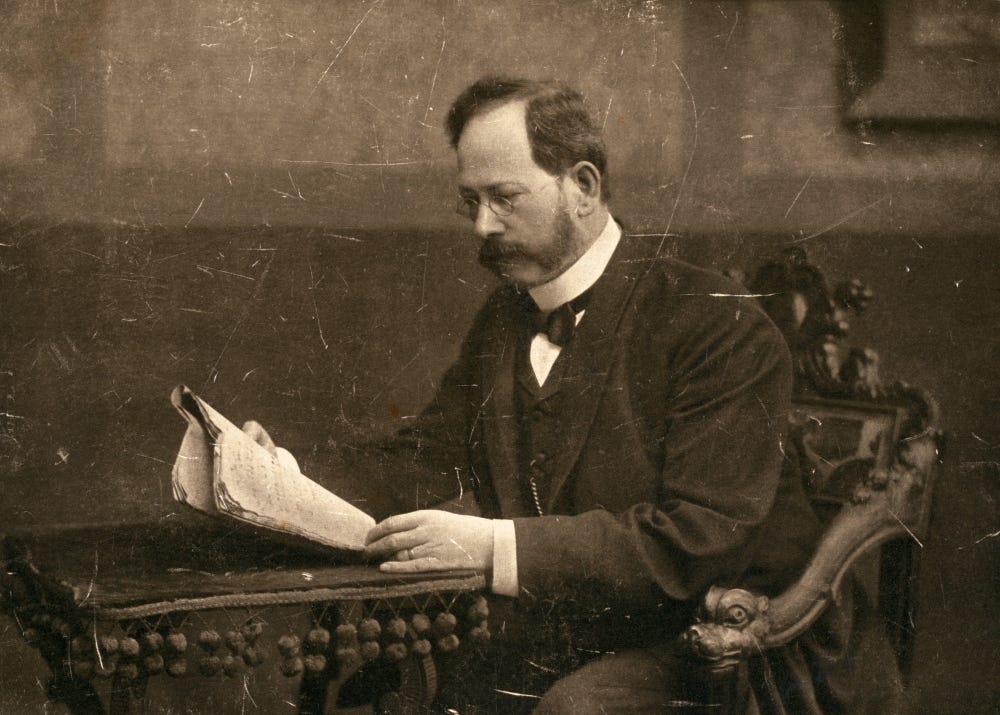
When Cohen’s lecture was ultimately published in London’s Jewish Chronicle, a copy made its way to the Prussia-based Birnbaum. The cantor of Königsberg was aghast — large parts of his generous letters appeared to have been adopted into the lecture without attribution. Birnbaum wrote to Germany’s weekly cantorial newspaper, Der Jüdische Kantor, publishing his two letters and Cohen’s lecture in succession with the hope of making his case:
“The discerning reader may then judge which thoughts I may rightfully consider my own, and I will have have for all future the satisfaction that every author is entitled to claim, as soon as he sees that with any results of his strenuous study, as required by the undeveloped but large field of the history of synagogue music — smuggling is being practiced. I am not speaking about the notes themselves, which I gladly made available to him, but rather, I am incensed by the way he used them, structuring his presentation entirely on my first letter, reciting many passages verbatim, and even claiming my conclusions as his own!”3
The accusation apparently reached Rev. Cohen, who responded to Birnbaum’s “Letter from Königsberg” in Der Jüdische Kantor with a “Reply from London,” accusing Birnbaum of inaccuracy and ingratitude. Writing in a glib British style, Cohen characterized his work as using only some of Birnbaum’s references, making standard summaries based on limited secondary literature, and giving due credit to the great scholar himself. “My darling, what more do you want?” he quipped, claiming his innocence and attributing any further misunderstanding to the inaccuracy of Birnbaum’s German translation of his lecture.
This was not the end of the controversy. It was taken up again in 1904 as Birnbaum once more pled his case to his fellow cantors, this time after Cohen’s plagiarism had been allegedly repeated in an article on cantillation for the Jewish Encyclopedia. I am reluctant to delve further into the back-and-forth of this public trial, but will simply summarize Birnbaum’s rejoinder to Cohen as follows:

This exchange teaches us an important lesson for scholarship and life: give credit where credit is due. The rabbis of the mishnah set this standard down long ago in Pirkei Avot: “Whoever repeats a statement in the name of the one who said it brings redemption to the world. As it is said: ‘And Esther told the king in Mordecai’s name.’” Looking at the exchange, it is clear that, minimally, a more generous acknowledgement by Rev. Cohen would have gone a long way.
Yet I still appreciate so many things about Rev. Francis Lyon Cohen’s splendid career, including his instinct to cold call his German-speaking elder colleague. One of the blessings of scholarship is the opportunity to interact with professors and practitioners from all over the world, many of whom are eager to speak with those who take an interest in their research, as exemplified by Birnbaum himself. Francis Cohen was also someone with wide interests beyond music alone — inspiring Jewish youth, supporting Jews in the military, and even leading a whole continent of Jewish congregations. And finally, Rev. Cohen was a prescient supporter of women’s voices in Jewish music, engaging his wife, Rose, to sing liturgical music examples at his public lectures.4 Music was for him an immutable aspect of a larger life journey, one in which he invested himself deeply in forming both his Jewish community and the larger society around him.
Many of us still seek the answers to our deepest questions in music. Sometimes this path is well-trodden, and sometimes must be forged anew. May this journey always take us to new heights of self-awareness, wisdom, and the rediscovery of that ever-echoing heartbeat.

Francis Lyon Cohen, “Synagogue Music: Its History & Character,” Jewish Chronicle (August 10, 1883): 12-13; (August 17, 1883): 12-13.
My sincere thanks to Amanda Ruppenthal Stein and Judith Pinnolis for successfully identifying this publication and its author(s) from the sparse abbreviations in Cohen’s endnote.
Eduard Birnbaum, “Briefe aus Königsberg,” Der Jüdische Kantor 5/43 (30 November 1883): 349. The full letter with its subsequent citations spans issues 41-47 (16, 23, 30 November; 7, 14, 21 December).
In 1886, Rev. Francis Lyon Cohen married Rose Hast, daughter of the First Reader of the Great Synagogue of London, Rev. Marcus Hast. She accompanied Cohen at his public lectures the following year during the Anglo-Jewish Historical Exhibition at Royal Albert Hall.
I haven't got anything intelligent to say, but I want to thank you for this. I'm fascinated by Jewish style in American popular songs of The Golden Era. I'm not sure how it is that I, Gentile by birth and with no formal musical training, recognize that sound when I hear it, but I do.
I haven't heard much of the music of Louis Moreau Gottschalk, but I have heard a little. I remained stunned that a Jewish man from New Orleans who had been dead for a quarter century before jazz really got to ginning could have anticipated jazz occasionally, but music doesn't lie.
Once again, each blog post is like its own graduate seminar in Jewish music. Kol Hakavod!